
Washing is the part of loc care people worry about most, and it’s where a lot of scalp and smell problems actually start. The good news: knowing how to wash locs properly is simple once someone shows you the method.
Clean locs are healthy locs, and the two things people get wrong are washing too rarely and not drying properly afterwards. Sort those two out and the rest is easy.
This guide covers how often to wash, how the method changes between starter and mature locs, the step-by-step itself, which shampoo to use, and the drying step almost everyone rushes.
It applies whether you call them locs, dreadlocks or dreads, they’re the same hair and they’re washed the same way. If you’ve been avoiding washing because you’re scared of undoing your locs, this is the part to read first.
Can you wash locs? Yes, and you should
Let’s clear this up first, because it’s the question that holds people back.
Yes, you can wash your locs, and you should. Clean hair locks better, smells better and stays healthier than hair that’s left unwashed. The myth that dreadlocks have to be dirty to form is exactly that, a myth. Dirt and build-up don’t help your locs lock; they clog the scalp, cause itching and lead to that damp, sour smell.
Where the worry comes from is fear of unravelling fresh starter locs, which is fair, but the answer is to wash gently and on the right schedule, not to skip washing. So the real question isn’t whether to wash your dreadlocks, it’s how, which is the rest of this guide.
How often should you wash locs?
There’s no single number, but there’s a sensible range. Fresh starter locs are fragile, so you’ll usually wash less often at first, often every two to four weeks in the early days, and always following what your loctician told you at your install.
Once your locs have matured and hold firm, you can wash more regularly, roughly every one to two weeks for most people, adjusting to your scalp and how active you are.
For most loc-wearers, under-washing causes far more trouble than over-washing. A lot of people go too long between washes out of fear, and that’s exactly what leads to build-up, an itchy scalp and that damp, musty smell.
On the other hand, washing every couple of days can dry the scalp out, so there’s a balance. If your scalp feels tight and flaky you may be washing too much or using the wrong product; if it feels greasy, itchy or smells, you’re probably not washing enough. Let your own scalp tell you where you sit in the range.
If you sweat heavily, train often or swim, you’ll need to wash more frequently, and that’s fine. A clean scalp is the goal, not a rigid schedule.
One thing worth knowing if you’re washing locs in the UK: a lot of the country has hard water, which leaves minerals behind in the hair and can add to build-up over time. If you’re in a hard-water area and notice your locs feeling stiff or dull despite washing, an occasional clarifying wash or a final rinse with filtered or softened water can help. It’s a small thing, but it’s the sort of detail that makes a difference over months.
Starter locs vs mature locs
The big difference is fragility. Starter locs, especially coils and two-strand twists, can slip and unravel if they’re washed too soon or handled roughly, because the hair hasn’t started to knot and hold yet. So in the first weeks you wash gently, less often, and carefully, and you follow your loctician’s timing on when the first wash is safe. Some people use a stocking cap or a bit of extra care over the sections to stop them loosening.
Mature locs are a different story. Once they’ve locked, they hold up to a normal wash with no real risk of coming apart, so you can be more thorough and wash more regularly.
The method below works for both; you just dial the gentleness up for starter locs and can relax a little once they’re settled. If you’re not sure which stage you’re at, our guide to starting locs in the UK walks through how locs settle over the first year.
How to wash locs, step by step
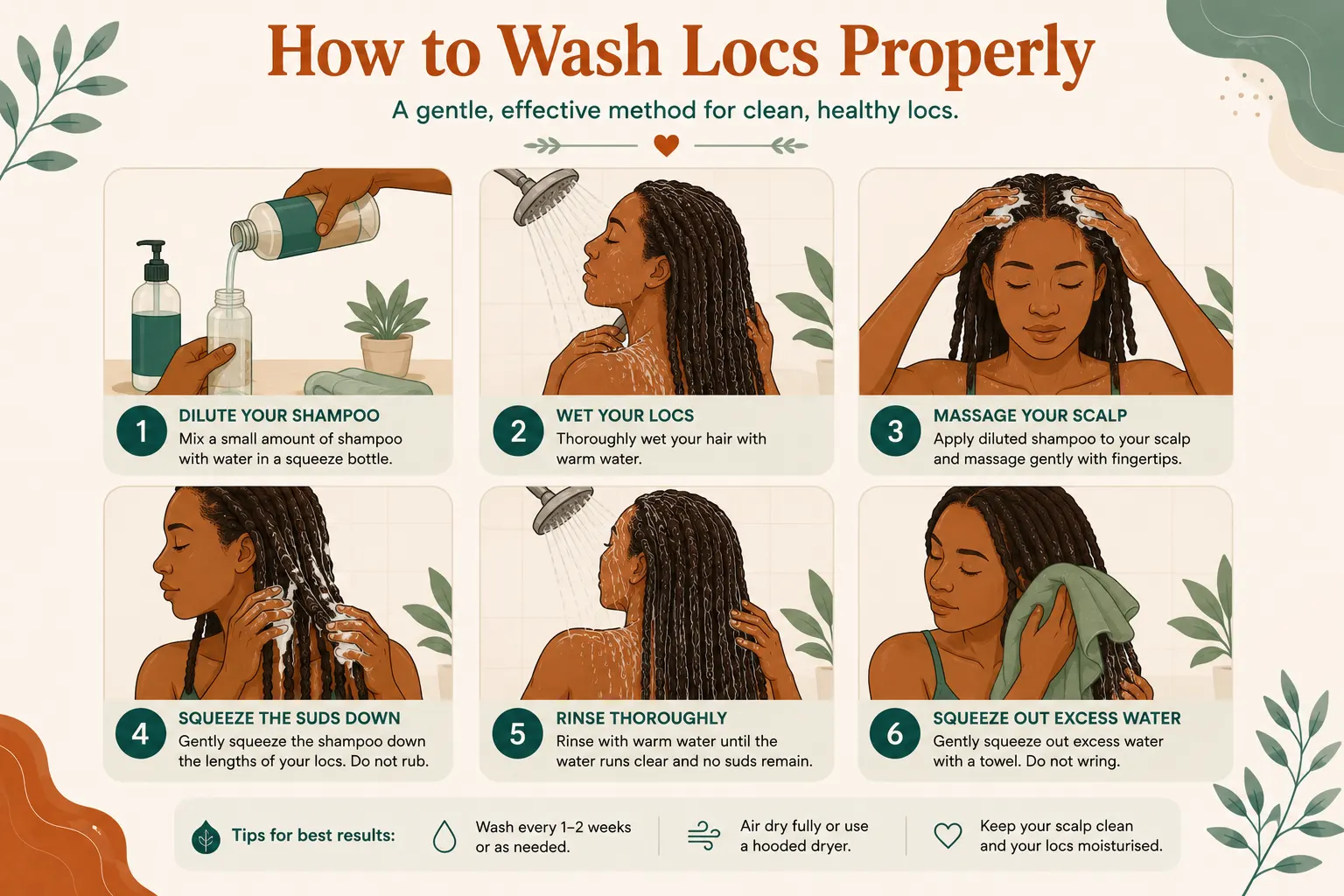
Here’s the method. It’s the same basic routine whether you palm roll, interlock or freeform; the only thing that changes is how gentle you are in the early weeks.
- Dilute your shampoo. Mix a residue-free or clarifying shampoo with water in an applicator bottle, or work it into a lather in your hands first. Diluting helps it rinse out cleanly, which is the whole game with locs.
- Wet your hair thoroughly. Let warm water run right through your locs so they’re fully saturated before the shampoo goes on.
- Focus on the scalp. Apply the shampoo to your scalp and massage with the pads of your fingers, not your nails. This is where the dirt, oil and product sit, so this is where the cleaning matters most.
- Let the suds run through the lengths. Rather than scrubbing each loc, squeeze the lather gently down the locs and let the runoff clean them. Scrubbing the lengths just roughs them up and works loose product deeper in.
- Rinse until the water runs clear. This is the step people cut short. Keep rinsing well past the point you think you’re done, because leftover shampoo is one of the top causes of build-up. Squeeze each section under the water to push the suds out of the core.
- Squeeze out the excess. Press the water out of each loc with your hands, then a towel. Don’t wring or twist hard, just get as much water out as you can before you dry.
That’s it. No special equipment, no scrubbing each loc for minutes on end.
The care is in the rinsing and the drying, not in how hard you wash.
Choosing a shampoo for locs
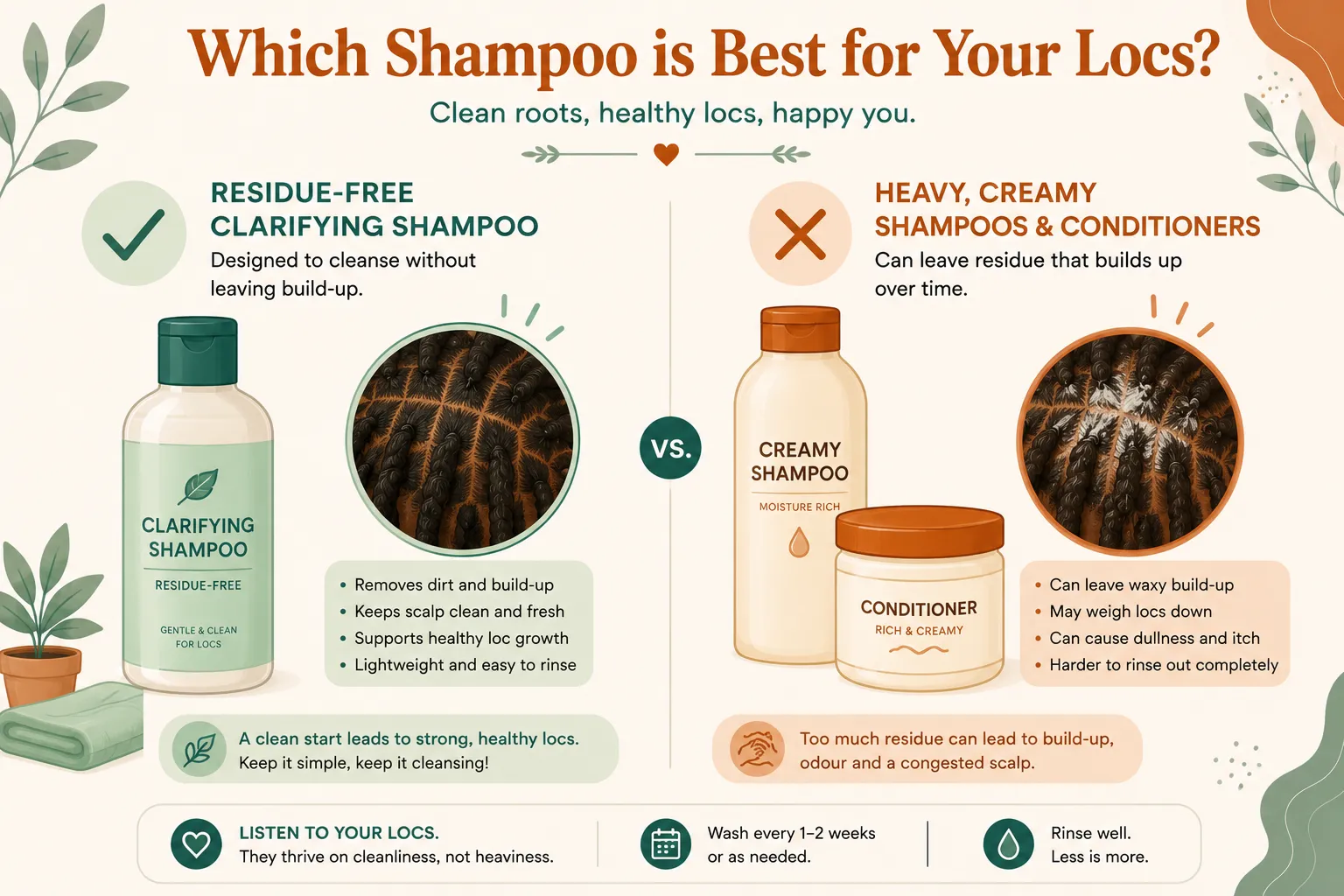
The single most important thing about loc shampoo is that it rinses clean and leaves nothing behind. Ordinary creamy shampoos and conditioners are designed to coat the hair, and that coating gets trapped inside locs where it can’t be brushed out, turning into waxy build-up over time. That’s why a residue-free or clarifying shampoo is the standard choice for locs.
You don’t need anything fancy or expensive, just something that lathers, cleans the scalp and rinses away completely.
Avoid heavy conditioners, leave-in creams and anything that promises to “coat” or “smooth”, since that’s the opposite of what locs need.
For specific products that work well and where to get them in the UK, see our roundup of the best residue-free shampoos for locs.
Do locs need conditioner?
This one trips a lot of people up. Regular rinse-out conditioner is generally a no for locs, because it’s designed to coat and soften the hair, and that coating gets trapped inside the loc where it turns into build-up and can stop the hair locking properly. If your starter locs feel dry, conditioner is not the fix.
What locs do need is moisture, which is a different thing. A light spritz of water, or water mixed with a little natural oil, keeps the hair supple without leaving residue.
Some people use a diluted leave-in made specifically for locs, but the rule is the same as everything else here: light, and it should rinse or absorb without sitting on top. If your scalp and hair feel dry between washes, reach for water and a light oil before anything creamy.
Drying locs properly (the step people skip)
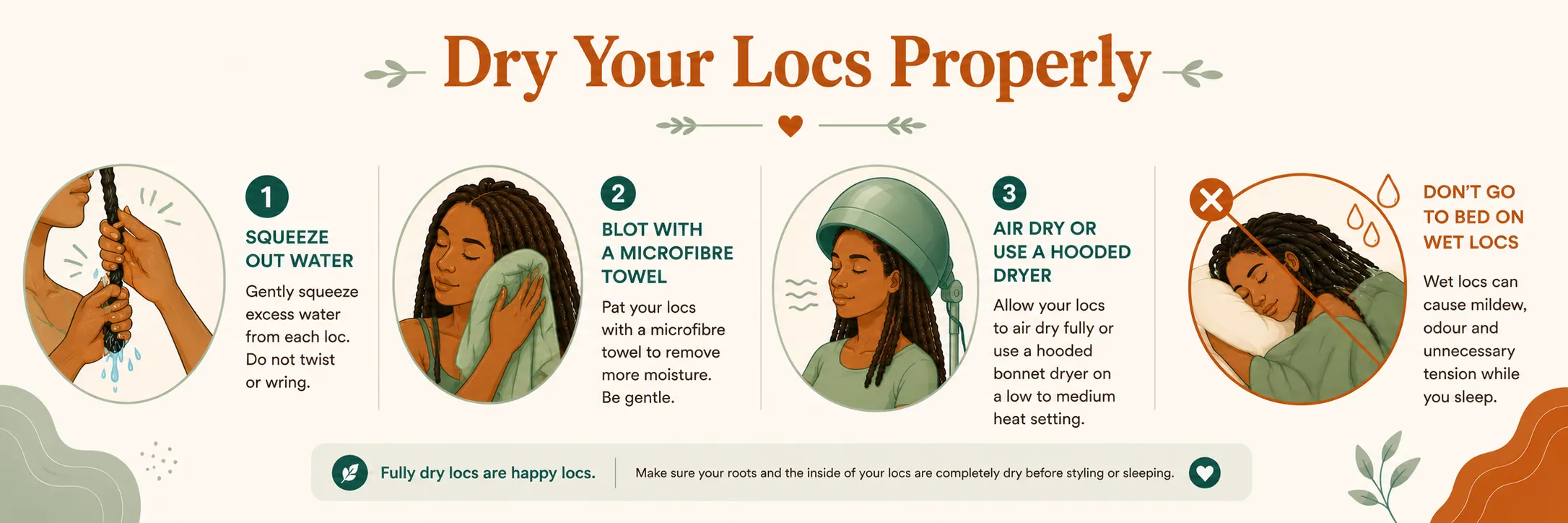
If there’s one part of washing locs that deserves more attention than it gets, it’s drying. Locs hold water deep in the core long after the outside feels dry, and locs left damp for hours are exactly what causes the sour, mildew smell people dread. Getting them properly dry matters as much as getting them properly clean.
After you’ve squeezed out the excess, give them time and air. Squeeze again with a microfibre towel, then let them air-dry somewhere warm, or speed things up with a hooded dryer or a bonnet dryer, which are the most reliable way to dry right through to the core.
Whatever you do, don’t tie your locs up wet, wrap them tight, or go to bed with them still soaking. Sleeping on damp locs traps moisture against your scalp all night, and that’s the classic recipe for the smell.
Make sure they’re genuinely dry, not just dry on the surface. If your locs still feel cool or heavy hours after washing, they’re still holding water and need more drying time.
Thicker and longer locs hold more water and take longer, so give them extra time rather than rushing to style them.
Looking after locs between washes
Between washes, keep it light.
The habits that keep locs fresh are small: keep your scalp clean, go easy on heavy oils and butters that sit on top and attract lint, and sleep in a satin or silk bonnet to protect them. Less product, not more, is almost always the answer.
Every few weeks you can give your scalp a reset with a diluted apple cider vinegar (ACV) rinse, which lifts light build-up and helps balance the scalp.
If your scalp itches or flakes between washes, that’s usually build-up or dryness rather than anything serious, and our guide to an itchy scalp with locs covers what helps. And if you’re picking up fluff and lint from hats, towels or bedding, the post on getting lint out of locs goes into keeping them clean between washes.
How to clean locs without washing
Sometimes you want to freshen up between full washes, or your starter locs aren’t ready for water yet. You can clean your scalp and locs without a proper wash, as long as you’re gentle.
A light spritz of diluted witch hazel or an ACV-and-water mix on a cotton pad, wiped along the parts, lifts oil and build-up from the scalp without soaking the locs. A dry-ish micellar or astringent scalp refresher does a similar job.
The one rule is the same as always: dry anything you dampen.
A between-wash refresh should leave your scalp clean and your dreads barely damp, not wet through. This is a top-up, not a replacement for washing, so keep to your normal wash routine as well, especially once your locs have matured.
Washing locs in the UK isn’t complicated once you’ve got the routine: wash often enough to keep the scalp clean, use a product that rinses away completely, rinse longer than feels necessary, and dry them all the way through.
Do that, and the build-up, itch and smell that worry most people simply don’t get a chance to start.