An itchy scalp is one of the most common complaints with locs, and it’s rarely anything to panic about. Most of the time an itchy scalp with locs comes down to a handful of everyday causes, and the fix is usually cleaning properly rather than scratching or piling on more product.
The frustrating part is that the two things people reach for first, a good scratch and a heavy oil, often make it worse.
Here’s what’s actually behind the itch, how to work out which cause is yours, what helps, and when it’s worth getting a professional to look.
What causes an itchy scalp with locs?
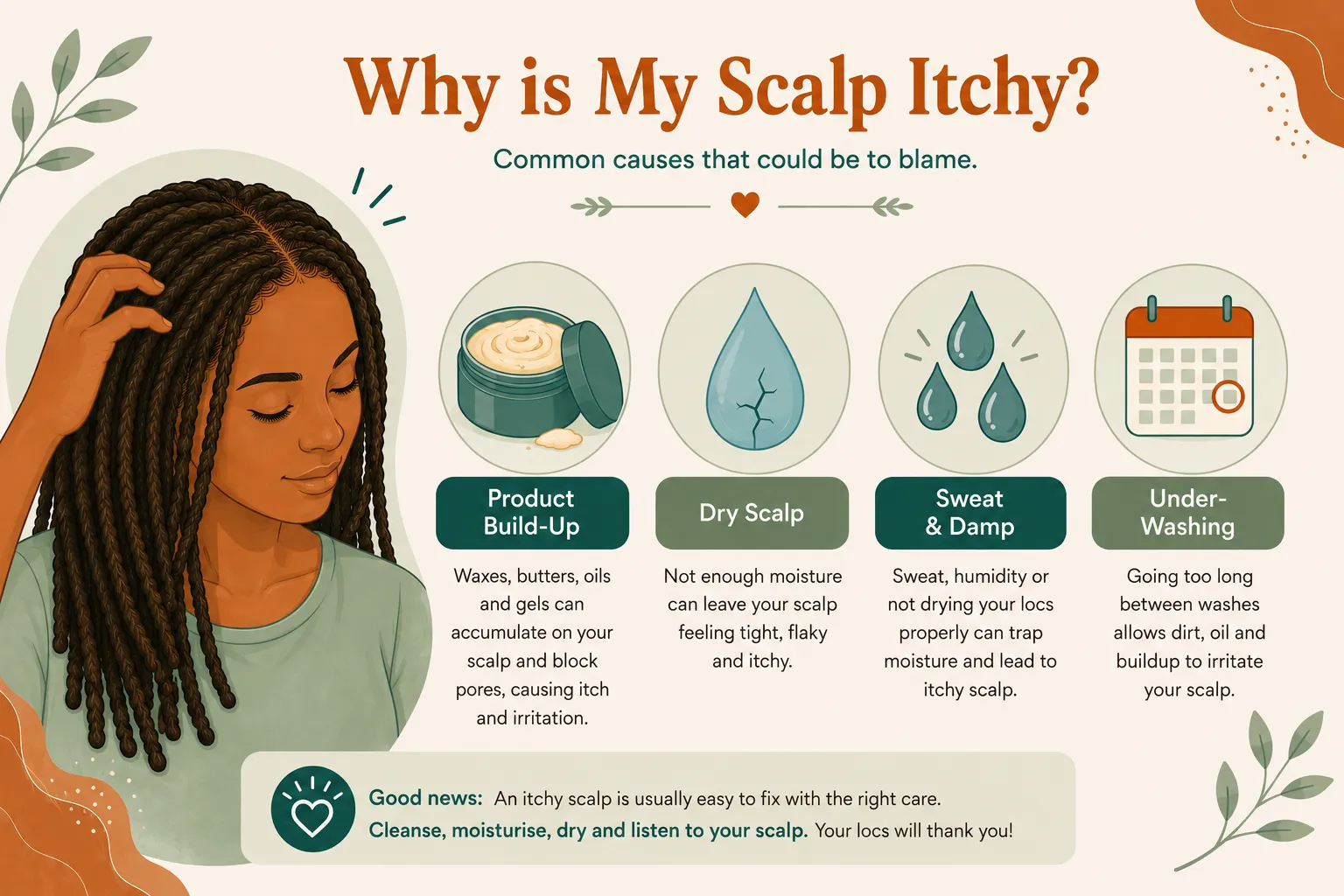
A few things come up again and again. Knowing which one is yours makes the fix obvious.
Product build-up is the big one, and it’s often mistaken for dandruff. Waxes, heavy creams, leave-in products and even too much oil get trapped in the locs and on the scalp, where they can’t be brushed out the way they would from loose hair. Over time that residue flakes, itches and holds onto dirt.
Dry scalp is the next most common. Because locs make it harder for your scalp’s natural oils to travel down the hair, the scalp itself can get dry, tight and flaky, especially in winter or if you’re washing with something harsh.
Then there’s the damp problem. Sweat from workouts, or locs that never fully dried after a wash, leave moisture sitting against the scalp, which irritates the skin and can start to smell. Under-washing feeds into this too. A lot of people go too long between washes because they’re afraid of unravelling their locs, and a scalp that isn’t cleaned often enough gets itchy and flaky on its own.
Less often, the cause is a genuine scalp condition rather than routine build-up or dryness, and that’s worth taking seriously rather than treating with more oil. More on that at the end.
Why starter locs itch the most
If your locs are new and your scalp is driving you mad, you’re not alone. Starter locs tend to itch more than mature ones, for a few reasons that stack up together.
The main one is that people are scared to wash them. Fresh coils and twists can loosen if they’re handled roughly, so a lot of new loc-wearers avoid washing for weeks, and a scalp that isn’t cleaned regularly gets itchy fast. On top of that, the early weeks often involve more product and more retwisting, both of which add to build-up right at the root where the itch is worst. Dryness plays a part too, since a newly sectioned scalp is more exposed to the air.
The fix is the same as for any loc itch, just done gently. You can wash starter locs without ruining them if you’re careful and follow your loctician’s timing on when the first wash is safe. Washing on schedule, keeping product light, and drying fully will settle most starter-loc itch. Resist the urge to scratch or to fix it with heavy oil, both of which set you back.
Build-up or dry scalp? How to tell them apart
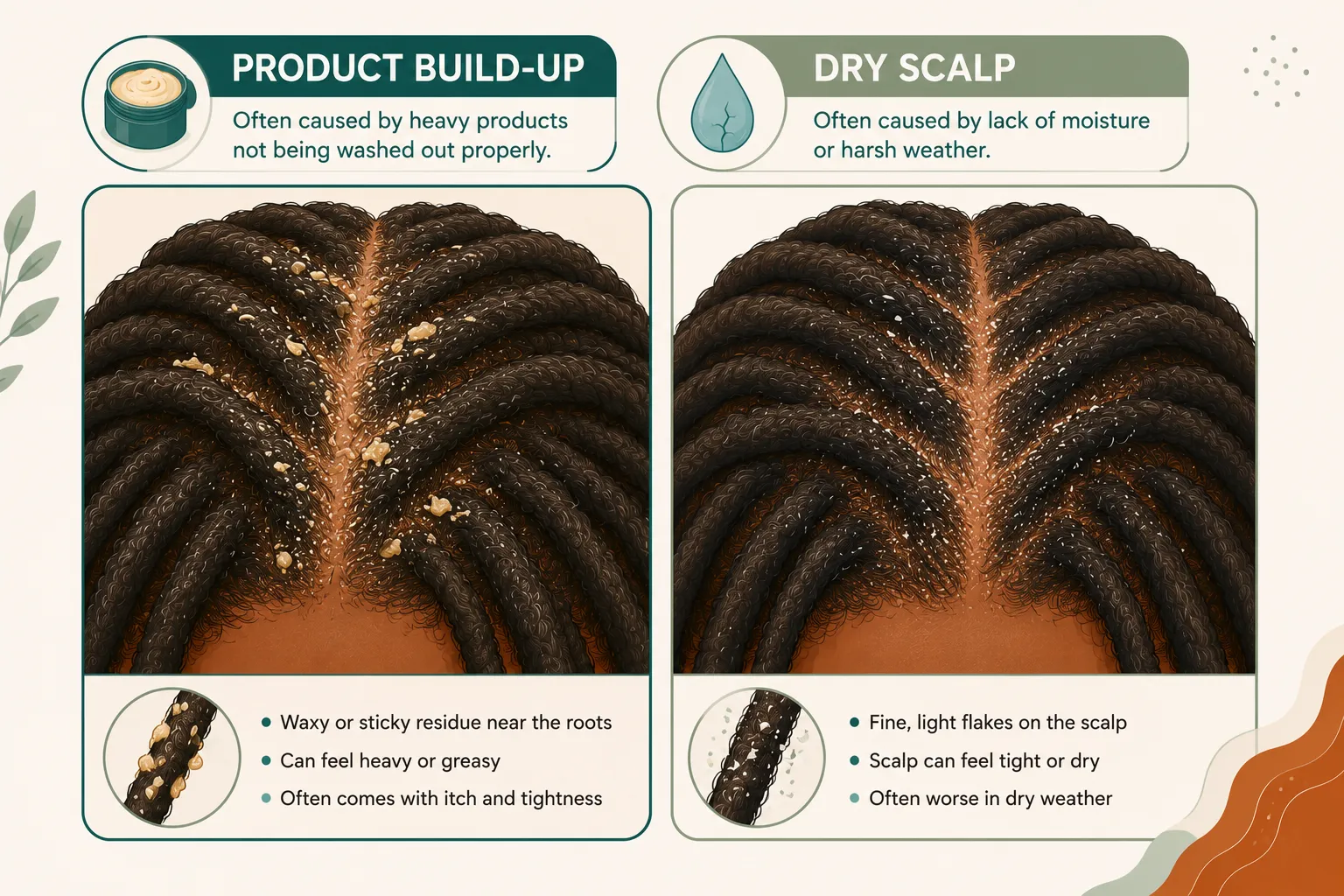
These two get confused constantly, and the fixes are different, so it’s worth a quick check. Build-up flakes tend to be larger, waxier and a bit greasy, and you’ll often see them clinging in and around the locs near the root. Dry-scalp flakes are finer, drier and whiter, and the scalp itself usually feels tight rather than coated.
The simple test: if your scalp feels coated, heavy or greasy and you’ve been using a lot of product, think build-up, and the answer is a proper clarifying wash. If your scalp feels tight and dry and the flakes are fine, think dryness, and the answer is gentle moisture, not more washing. Get this the wrong way round, by drenching a dry scalp in oil or by scrubbing an already-dry scalp raw, and you’ll make the itch worse.
What actually helps an itchy scalp
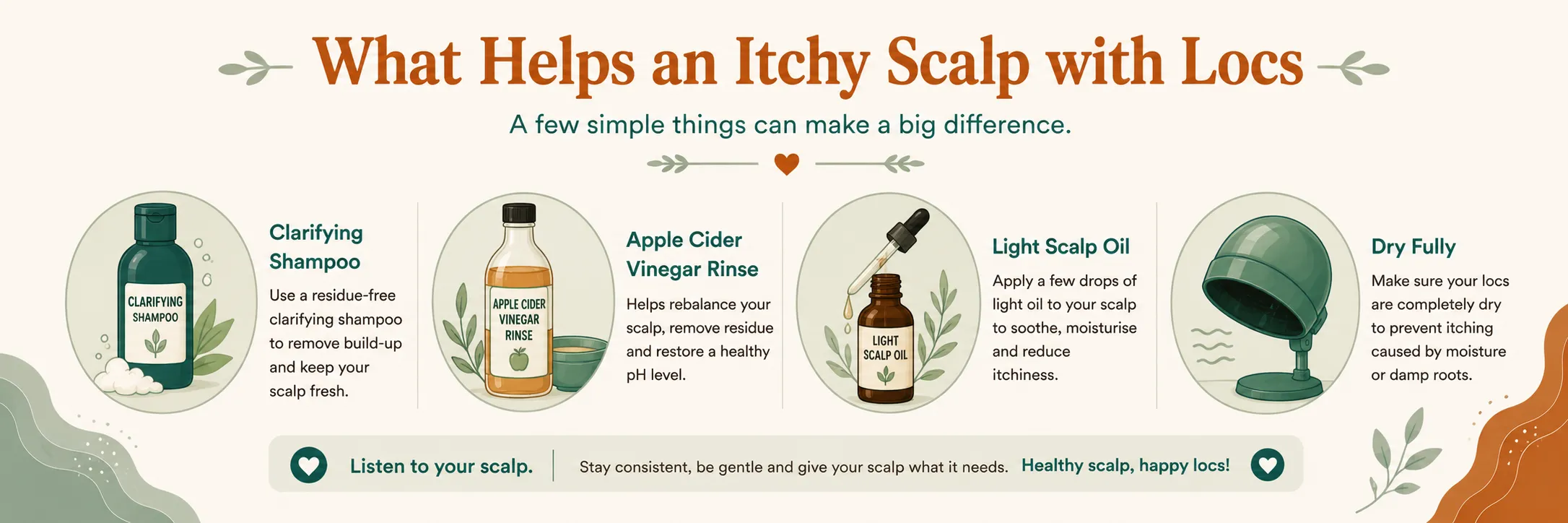
Most loc itch clears up with a few straightforward habits.
Wash properly, and often enough. This is the one people skip.
A clean scalp itches far less, and washing every week or two, gently and with the right product, prevents most build-up and dryness in the first place. If fear of washing has been part of the problem, our guide to washing locs walks through how to do it without undoing your locs.
Use a clarifying or residue-free wash to shift build-up. If build-up is your issue, an ordinary shampoo won’t cut it. A clarifying wash strips the trapped residue that regular washing leaves behind. An occasional apple cider vinegar rinse, well diluted with water, does a similar job and helps reset the scalp’s natural balance.
Moisturise a dry scalp lightly, at the scalp, not the locs. If dryness is the cause, a light scalp oil applied directly to the roots helps, as long as it absorbs quickly rather than sitting on top and adding to build-up. Water first, then a little oil, is usually enough. Our post on the best oils for loc moisture covers which ones sink in without leaving residue. See: best residue-free shampoos for locs.
Dry your locs fully after washing. Damp locs are a common, overlooked cause of itch and smell. Squeeze the water out, give them time and air, or use a hooded or bonnet dryer to get them dry right through to the core. Never go to bed on soaking locs.
Protect your scalp at night and between washes. Sleeping in a satin or silk bonnet keeps your locs cleaner and stops cotton pillowcases pulling moisture out of your scalp. And go easy overall: the scalp does best when it’s left clean and lightly moisturised rather than layered with product and constantly fiddled with. If you’re in a hard-water area, an occasional clarifying rinse helps, since mineral residue adds to the build-up that causes itch.
What to stop doing
Some of the usual reactions to an itchy scalp make it worse:
- Piling on heavy oils, waxes and butters. These are a leading cause of build-up, so more of them rarely fixes an itch and usually adds to it.
- Scratching with a comb, pen or your nails. It breaks the skin, which can lead to soreness and infection, and it can loosen your roots.
- Leaving it weeks between washes. Under-washing is a cause, not a cure. A clean scalp is a comfortable scalp.
- Drenching a dry scalp in product instead of moisturising lightly and washing regularly.
When to see someone
Most itchy scalps settle once washing and moisture are sorted. But some things point to more than routine build-up or dryness, and those are worth a professional’s eyes rather than another bottle of oil.
See a GP or a dermatologist if you have persistent, heavy flaking that doesn’t improve with better washing, redness or sore patches, open or weeping skin, or signs of a scalp condition such as seborrhoeic dermatitis or psoriasis. These are medical issues, not maintenance ones, and they need proper treatment rather than a change of hair oil. A pharmacist can also point you towards a suitable medicated shampoo in the meantime.
For anything to do with how your locs are maintained, a loctician is the right person to ask. If you’re still finding your feet with loc care generally, our guide to starting locs in the UK covers the aftercare basics that head off most scalp trouble before it starts.
An itchy scalp with locs is common, usually simple, and almost always down to how the scalp is being cleaned and moisturised. Wash well and often enough, keep products light, dry your locs properly, and see someone if it doesn’t settle. Get those right and the itch tends to sort itself out, and your scalp and locs stay healthier for it in the long run.