Two numbers tell you most of what you need to know about Sisterlocks™ in the UK. The first is the price: a full install, called establishment, starts around £800 and climbs past £995 once you factor in length. The second is the supply: at the time of writing, the whole country has only about 15 Certified Consultants.
So before you fall for the look, three questions are worth answering. What are you actually paying for? Is there anyone near you who can do it? And would microlocs get you to more or less the same place for less?
This guide answers all three with real published prices from UK consultants, not the American figures most articles recycle.
Sisterlocks is a registered trademark of Sisterlocks Inc. Loctician.co.uk isn’t affiliated with or endorsed by them; we use the name here to describe their system.
What Sisterlocks actually is
Sisterlocks is a trademarked natural hair management system, created by Dr JoAnne Cornwell, that produces very small locs using a proprietary tool and a set grid pattern.
No chemicals, no heat, and no extensions needed to start. The result is small, uniform locs that behave a lot like loose hair once they’ve settled, which is a big part of why the look has stayed popular for decades.
The part that trips people up when they compare quotes: Sisterlocks is a system with a training programme and an official registry behind it, not simply a size of loc.
Anyone with the skill can install small locs. However, only registered consultants and trainees can install them using the Sisterlocks tool and grid and call the result Sisterlocks.
That distinction is the whole reason the price and the availability look the way they do, so hold onto it as you read on.
What Sisterlocks cost in the UK
This is the section most people come for, so here are real figures from UK consultants who publish their prices. Treat these as published prices from individual consultants, not a national average, because there isn’t one.
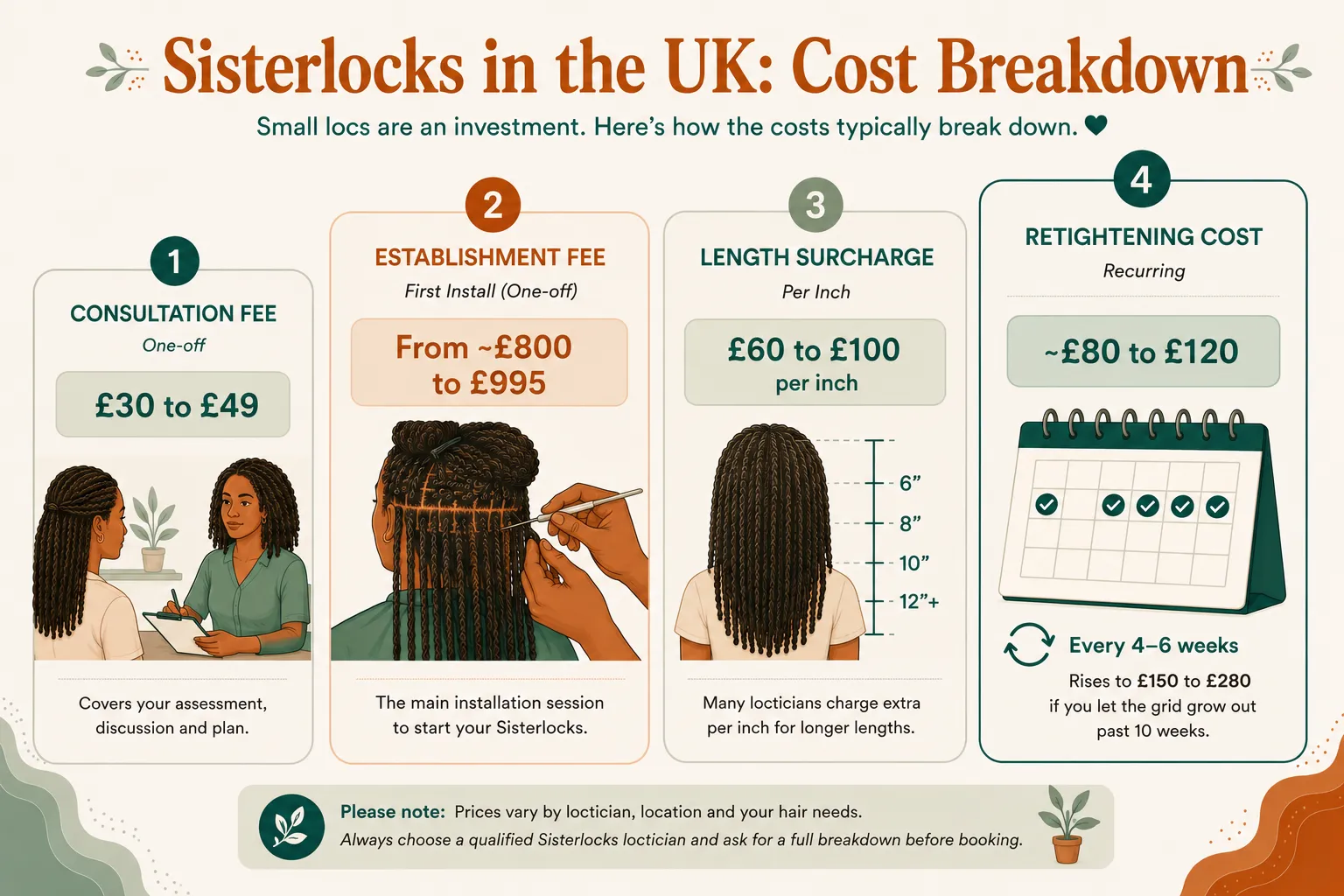
| What you’re paying for | Published UK price | Notes |
|---|---|---|
| Consultation | £30 to £49 | 30 minutes to 2.5 hours; often includes tester locs; sometimes non-refundable or credited against the install |
| Establishment (first ~6 inches) | From ~£800 to £995 | The full install, usually spread over two to three consecutive days |
| Extra length above 6 inches | £60 to £100 per inch | Longer hair costs meaningfully more |
| Retightening (every 4 to 6 weeks) | ~£80 to £120 | Rises to £150 to £280 if you let the grid grow out past 10 weeks |
To put real names to those ranges: The Locplace in Manchester lists establishment from £800 for the first six inches plus £100 per additional inch, a £30 consultation and retightening from around £80.
MyMane in Kent lists establishment from £995 then £60 an inch, a £49 consultation that includes twelve tester locs, and a retightening ladder that climbs with time between appointments: £90 at four to six weeks, £120 at seven to eight weeks or 500-plus locs, £150 at nine to ten weeks, and up to £280 once you’re past thirteen weeks.
Confirm both are current before you rely on them.
Time is part of the cost too. Establishment isn’t a single afternoon; a full head is typically done over two to three consecutive days, so you’re setting aside proper time as well as money.
The consultation comes first, usually a separate shorter appointment where the consultant installs a few tester locs, checks your hair and sets expectations. Some consultants credit the consultation fee against the install; others don’t, so ask.
The cost nobody adds up is the ongoing one. A retie every five to six weeks at around £100 works out at roughly £1,000 a year, on top of the establishment fee.
Sisterlocks is not a one-off spend; it’s a standing appointment in your calendar and your budget, and letting it slip only makes the next retie longer and dearer.
What size are Sisterlocks, and how many will I have?
Sisterlocks are small, and that’s the point of them.
A full head is usually several hundred locs, commonly somewhere from around 200 to 400, and sometimes 500 or more on dense hair. The exact number and size come down to your head size, your hair’s density, and the grid your consultant sets at the consultation, which is also where the tester locs come in.
Size and count matter for more than looks.
More locs, or smaller ones, mean a longer install and can push up your retightening cost, which is why some consultants charge more once you’re past 500 locs.
If you’re after the very smallest “micro” look, expect it to sit at the top of the time and price ranges. If you’re not sure what will suit you, that’s exactly the conversation to have at the consultation rather than deciding from a photo.
It’s worth being realistic about what the count means day to day.
A few hundred small locs take longer to wash, longer to dry and longer to retighten than a head of medium locs, so the small size that gives you all that styling range also asks for more time in upkeep.
That’s not a reason against it, just part of the honest picture, and it’s the same trade-off whether the small locs are Sisterlocks or microlocs.
Can you get Sisterlocks on your hair?
Sisterlocks was designed to work across a wide range of textures, from tighter 4C coils to looser curl patterns, which is part of why it caught on.
The usual practical minimum is around four inches of natural hair, enough for the consultant to part and set the grid. If your hair is relaxed or heat-damaged, most consultants will want that grown out or trimmed off first, because treated hair won’t lock or behave like natural hair.
Fine hair can take small locs well, but sizing and tension matter more, since parts that are too small or a grid pulled too tight will stress fine hair at the root.
A good consultant adjusts the grid to your hair rather than forcing a one-size approach. Type doesn’t rule you out though; your natural length and hair health are what decide whether you’re ready to start.
Finding a consultant in the UK, and what the tiers mean
Two words you’ll see on the registry are Trainee and Certified Consultant, and the difference affects both price and who’s allowed to work on your hair.
A Trainee has completed the official four-day course and is listed on the trainee register. A Certified Consultant has since documented qualifying client work and holds paid certification.
Some consultants carry extra designations too, such as Brand Ambassador, or “R” Certified for those approved to teach the official retightening class.
Trainees often charge less and are building a client list, which is a legitimate route as long as you know that’s what you’re choosing.
Now the honest supply picture.
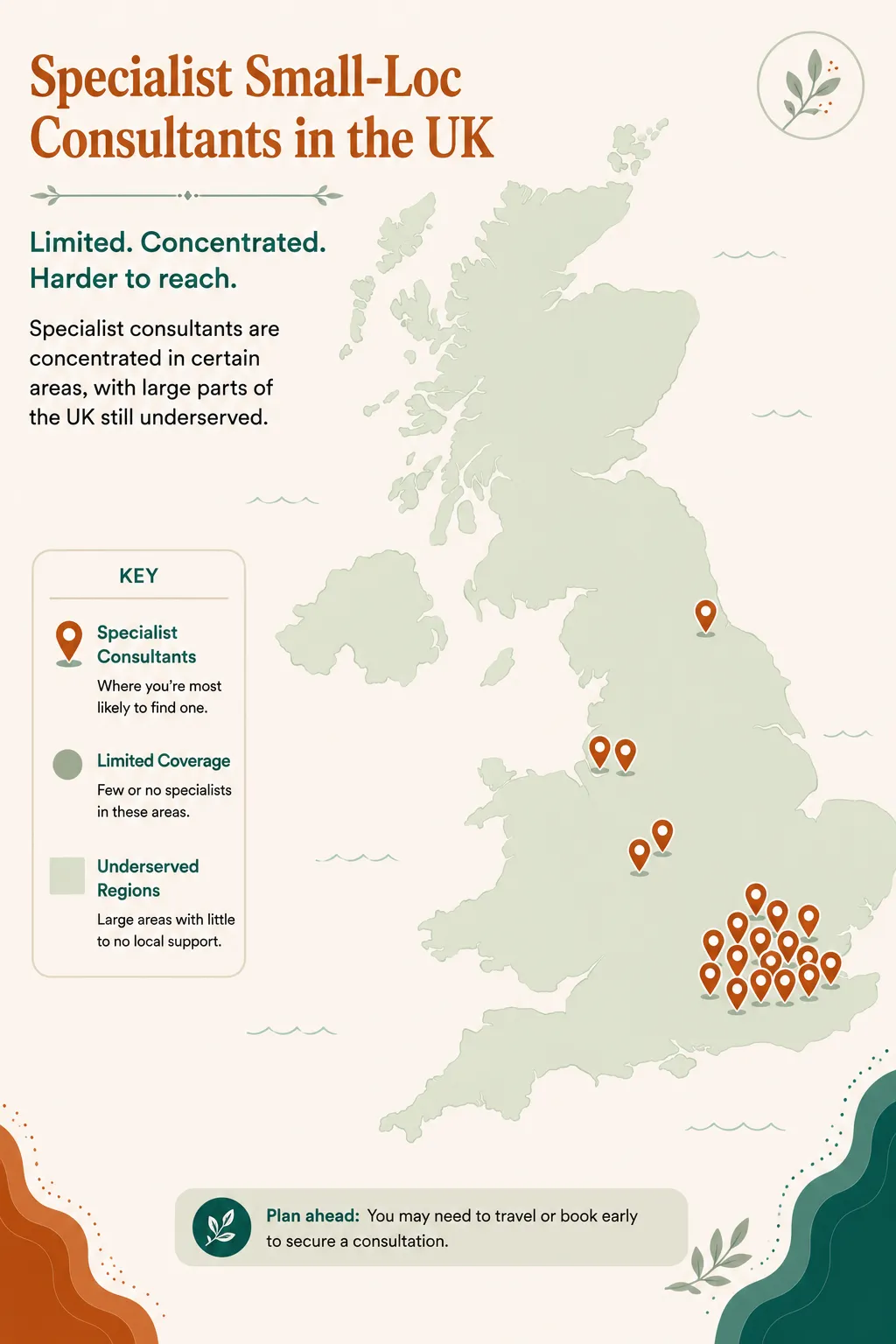
At the time of writing the official UK registry holds roughly 70 names, of whom only about 15 are Certified Consultants, and close to half the whole register sits in and around London, with small clusters in the West Midlands and Greater Manchester and thin coverage elsewhere.
If you’re in the South West, Wales, Scotland or the North East, the practical answer to “can I get Sisterlocks near me” is often no, or not without travelling and paying for the privilege.
Scarcity has knock-on effects worth planning for.
Where a consultant is one of only a handful serving a whole region, waiting lists and travel are common, and establishment often needs booking weeks ahead around those two-to-three consecutive days.
Some people travel to London or to the nearest cluster for the install, then face the same journey every four to six weeks for retightening, which is where the real cost and hassle add up. Factoring in the travel and the wait before you commit saves disappointment later.
Check current status two ways: the official Sisterlocks consultant listing and trainee registry, which are the only official record of who holds active status, and our own verified filter on the directory, which flags the consultants we’ve matched against that registry and listed.
Registry status changes as people move on and off it, so always check the official source before you book.
Sisterlocks or microlocs?
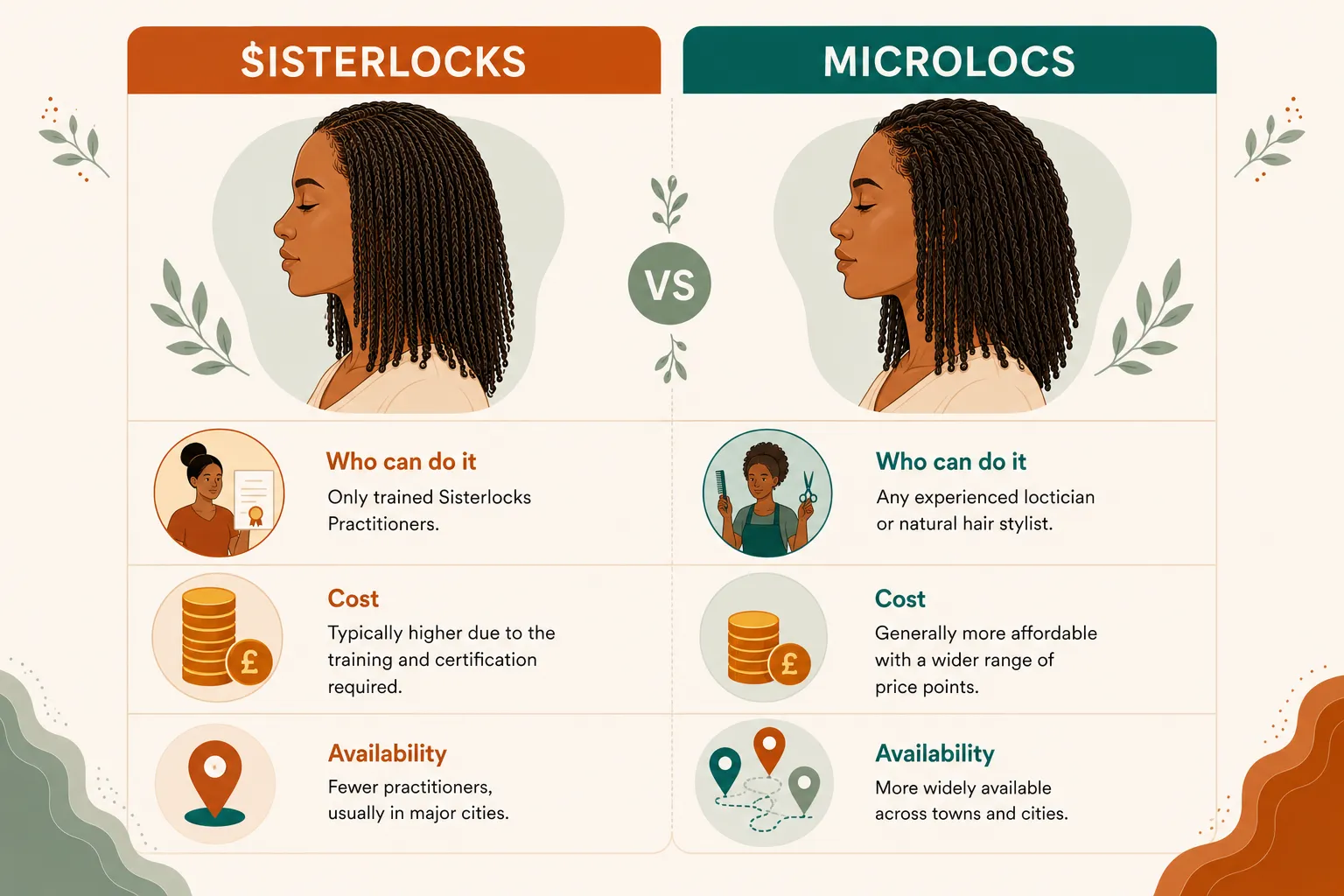
This is the comparison the title promises, and the honest answer is that for a lot of people microlocs gets them to the same place. Here’s how the two line up.
Size is similar; both are small locs. The method differs: Sisterlocks uses one patented-style tool and a set grid taught through its training programme, while microlocs vary by loctician.
Who can do it differs most of all: registered consultants and trainees only for Sisterlocks, versus any competent loctician for microlocs.
Cost differs at the start, roughly £800 and up for Sisterlocks against roughly £400 to £800 to start microlocs, though the gap narrows over time because both need retightening every four to six weeks.
And availability is the big one: Sisterlocks is scarce outside London, microlocs is widely available across the UK.
If you want the specific system, the training standard and the consistency it brings, and you can reach a consultant, Sisterlocks is what you’re paying for.
If you want small locs and there’s no consultant within a sensible distance, a good microlocs loctician is the sensible choice, not a consolation prize. Our guide to microlocs in the UK covers what they cost and where to get them, and you can browse the microlocs directory directly.
Styling Sisterlocks
Once they’ve settled, small locs style almost as freely as loose hair, and that flexibility is a big part of the appeal. You can wear them down, pull them into updos and buns, braid them, pin them into occasion styles, or curl them with rods or braid-outs without heat.
Because there are so many fine locs, the styles hang and move in a way chunkier locs can’t, which is why small locs turn up so often in wedding and event hair.
In the early months, go easy. Fresh small locs are still settling, so tight styles that pull at the grid can stress the roots before the locs have matured.
Keep styling gentle and loose at first, and save the more elaborate looks for once your locs are properly established.
After that, the styling range is one of the main reasons people choose small locs in the first place, whether that’s Sisterlocks or microlocs.
Before you book
A few questions save money and grief.
- Ask to see the consultant’s current registry entry, so you know what you’re paying for.
- Check whether the quote covers the follow-up appointment, and who does your retightening afterwards, because some consultants establish only and refer maintenance out.
- Ask what happens if you can’t keep to the four-to-six-week schedule, since letting the grid grow out is what pushes retightening into the higher price brackets.
One health point, put plainly: small locs are not automatically gentle. Any grid set too tight, or retightened too hard, will thin a hairline over time, exactly as it does with any loc method.
If a consultation or a retie leaves your scalp sore, that’s too much tension, and you should say so. If you’re weighing up who to trust with your hair, our guide to how to choose a loctician applies just as well to choosing a consultant.
The bottom line
Sisterlocks is a real, specific thing with a real, specific price, and in the UK it’s scarcer than the Instagram feed suggests.
If you want the system and you can reach a consultant, go in knowing the establishment cost, the two-to-three-day install and the standing retightening bill, and check the registry before you hand over a deposit.
If what you actually want is small, easy-to-style locs without the four-figure start or the two-hour drive to a consultant, microlocs gets you there.
Both are good outcomes, and either way you end up with the small locs you were after. The only bad one is paying Sisterlocks money without knowing what you’re paying for.