If you’ve decided to start locs but can’t work out how to actually start them, this is the choice you’re stuck on. Comb coils vs two-strand twists is the comparison most people weigh up, with braids as the third common option, and the right one comes down to your hair length, your texture and how much of the settling stage you’re happy to sit through.
There’s no best starter method per se. There’s the one that suits your hair.
Here’s what each of the three actually is, how it looks while it settles, which hair it suits, and how to choose between them. If you take one thing from it, let it be that the method matters less than picking one that genuinely suits your hair and sticking with it.
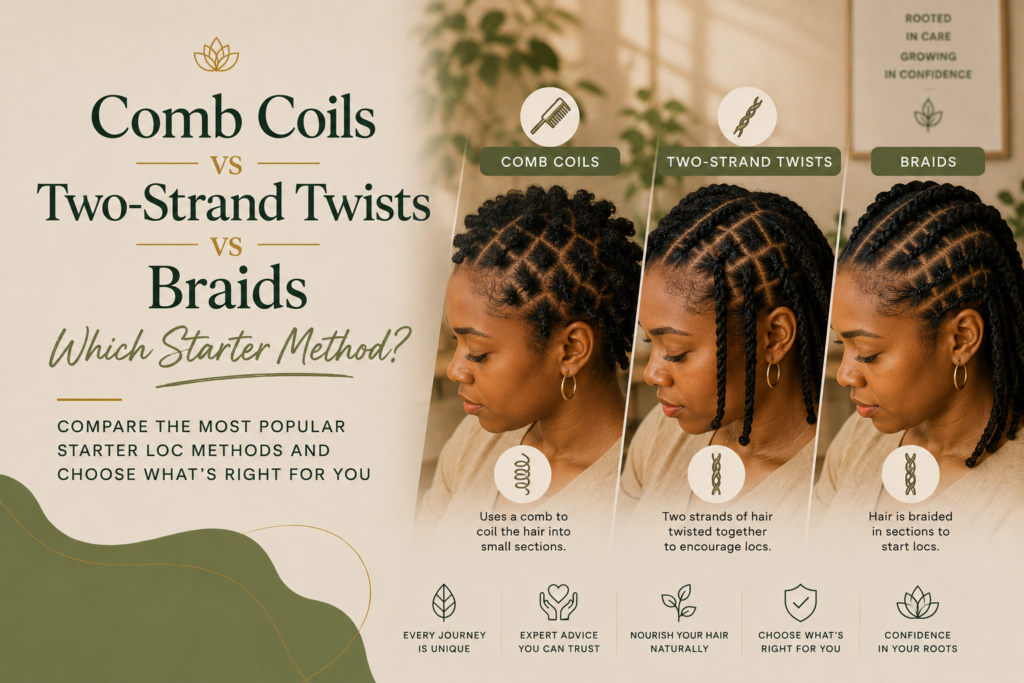
Comb coils
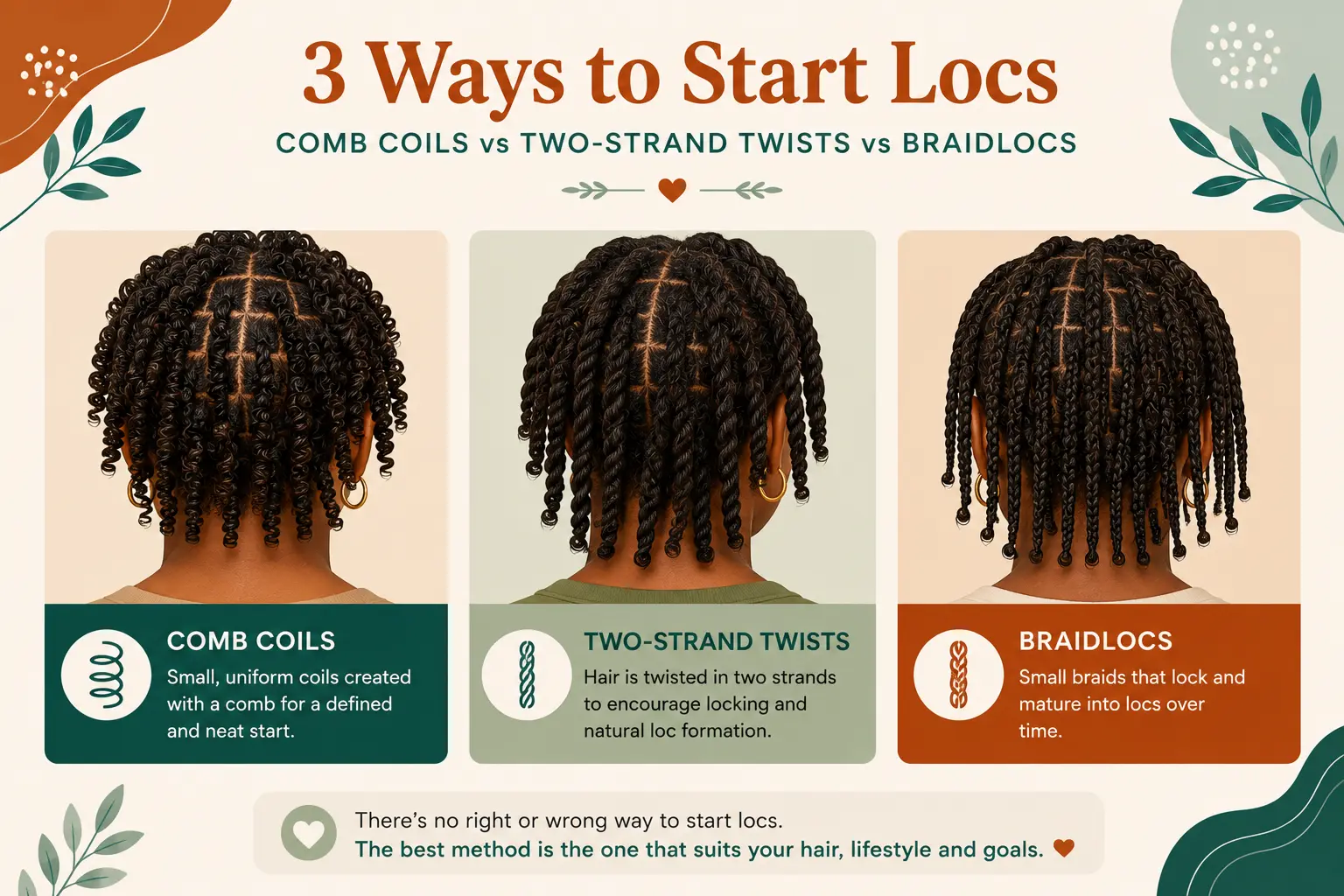
Comb coils are the most common way to start locs, especially on shorter hair. The loctician sections your hair into a grid, then uses a fine-tooth comb to spin each section into a small, tight spiral that sits close to the scalp. It’s the neatest-looking start of the three, and because the coil holds the shape while the hair does the rest, it can begin on relatively short hair, sometimes as little as around 5cm on tightly coiled textures.
The trade-off is that coils are the most fragile in the early weeks. Until the hair inside starts to knot and hold, a coil can unravel easily if you wash too soon, sleep on it roughly or fiddle with it. That’s why the aftercare in the first month matters so much with coils. They suit tighter, coilier textures best, since looser hair struggles to hold the spiral.
Expect comb coils to look crisp at first, then go through the frizzy settling stage over the following weeks and months as they bud and lock. That in-between look is normal, not a sign they’re failing.
The other thing to know about coils is that they need the most restraint from you early on.
No washing until your loctician says it’s safe, minimal handling, and a satin bonnet at night to stop them catching and loosening.
Get through the first month or two without disturbing them too much and they settle into locs beautifully. Rush it, and you can find yourself with half-unravelled coils and a frustrating restart.
Two-strand twists
Two-strand twists are made by parting the hair into sections, splitting each section into two, and twisting the two strands around each other down the length. They give a slightly thicker starter loc than coils and a rope-like texture that stays visible while the hair locks inside.
Twists are more forgiving than coils in the early weeks, which is a big part of why they’re the most popular method for people starting at home. They hold together better through the first washes, and they’re simpler to do on your own hair.
They also tend to suit medium to longer hair, or anyone who wants a bit more security than a coil offers in those fragile first weeks. You’ll usually want a little more length than for coils, often around 8 to 10cm, so there’s enough hair to twist and hold.
Like coils, twists pass through the settling stage, frizzing and puffing before they mature. The twist pattern gradually disappears as the hair knots and locks.
One point worth making about twists: the size you start with is roughly the size you keep, so the sections your loctician parts, or that you part yourself, set how thick your final locs will be. Bigger sections give chunkier locs and lock a little slower; smaller sections give finer locs but shouldn’t be so small that they’re weak at the root. This is true of all three methods, but twists make it especially easy to see, since the starter loc is already close to its mature thickness.
Braids (braidlocs)
Braidlocs start from small braids or plaits rather than coils or twists. The braid gives the most structure and hold of the three, so the locs stay secure through the early weeks with the least risk of unravelling, and the plaited pattern often stays visible for a good while as the hair locks inside and around it.
Braidlocs suit longer hair and people who want maximum security while their locs settle, or who simply like the defined, textured look of a braided base.
The main thing to know is patience: because the braid pattern holds for months, braidlocs can take longer to look like fully rounded locs, and some people love that defined stage while others find it slow. They’re a common choice for those who don’t want to babysit fragile coils in the first month.
One practical upside of braidlocs is that they hold up well to washing from early on, since the plait keeps everything in place while the hair inside locks.
That makes them a sensible pick if you know you won’t be able to baby your starter locs, or if you’re active and want to keep washing regularly without worrying about unravelling. The flip side is that a braided base can lock quite tightly, so the finished locs sometimes feel firmer and take longer to soften than coil or twist starts.
How long before each one locks?
None of these methods gives you locked hair on day one. Coils, twists and braids all start the hair on the road to locking, and the actual locking happens over the following months as the hair inside knots and binds.
As a rough guide, most people find their locs start to feel genuinely locked somewhere between six and twelve months in, with full maturity often a year or two out. Texture drives the pace far more than the method does, so tighter hair gets there sooner whichever route you took.
Where the methods differ is how long the starter pattern stays visible. Coils lose their spiral first as they frizz and bud; twists hold their rope pattern a bit longer; braids keep their plaited look the longest of all.
So, if you don’t like a particular starter look, that’s worth factoring in, because you’ll be living with it for a while before it matures into a rounded loc.
Comb coils vs two-strand twists vs braids: side by side
Here’s the quick comparison if you just want the shape of it.
| Method | Minimum length | Best for | Early fragility | DIY-friendly? | Starter look |
|---|---|---|---|---|---|
| Comb coils | Around 5cm+ | Shorter, tightly coiled hair | Highest, unravels easily | Possible, but fiddly | Neat spirals |
| Two-strand twists | Around 8 to 10cm+ | Medium to long hair, home starts | Moderate | Yes, the easiest to self-start | Thicker rope texture |
| Braids (braidlocs) | Around 10cm+ | Longer hair wanting security | Lowest, most secure | Possible if you can plait | Defined plaited pattern |
Treat the lengths as a guide, not a rule. Tighter, kinkier hair can often start shorter than the figures above, while looser or finer hair usually needs a bit more length and may need extra help to hold any of these methods.
How texture changes the picture
Texture matters as much as length when you’re choosing. Tighter textures, the sort often described as 4B or 4C, grip and lock fastest, so they can start on shorter hair and hold a coil or twist with the least trouble.
Looser curl patterns and softer, finer hair lock more slowly and can struggle to hold a simple coil, so they often do better with twists or braids, which give more structure, or may need a firmer method like interlocking to hold at all.
If your hair is on the looser or finer side, it’s worth a consultation before you decide, because the method that photographs well on someone else’s 4C hair may not hold on yours.
Our guide to hair texture and locs goes into how 4A, 4B and 4C hair behave when you lock them.
Can you start these at home?
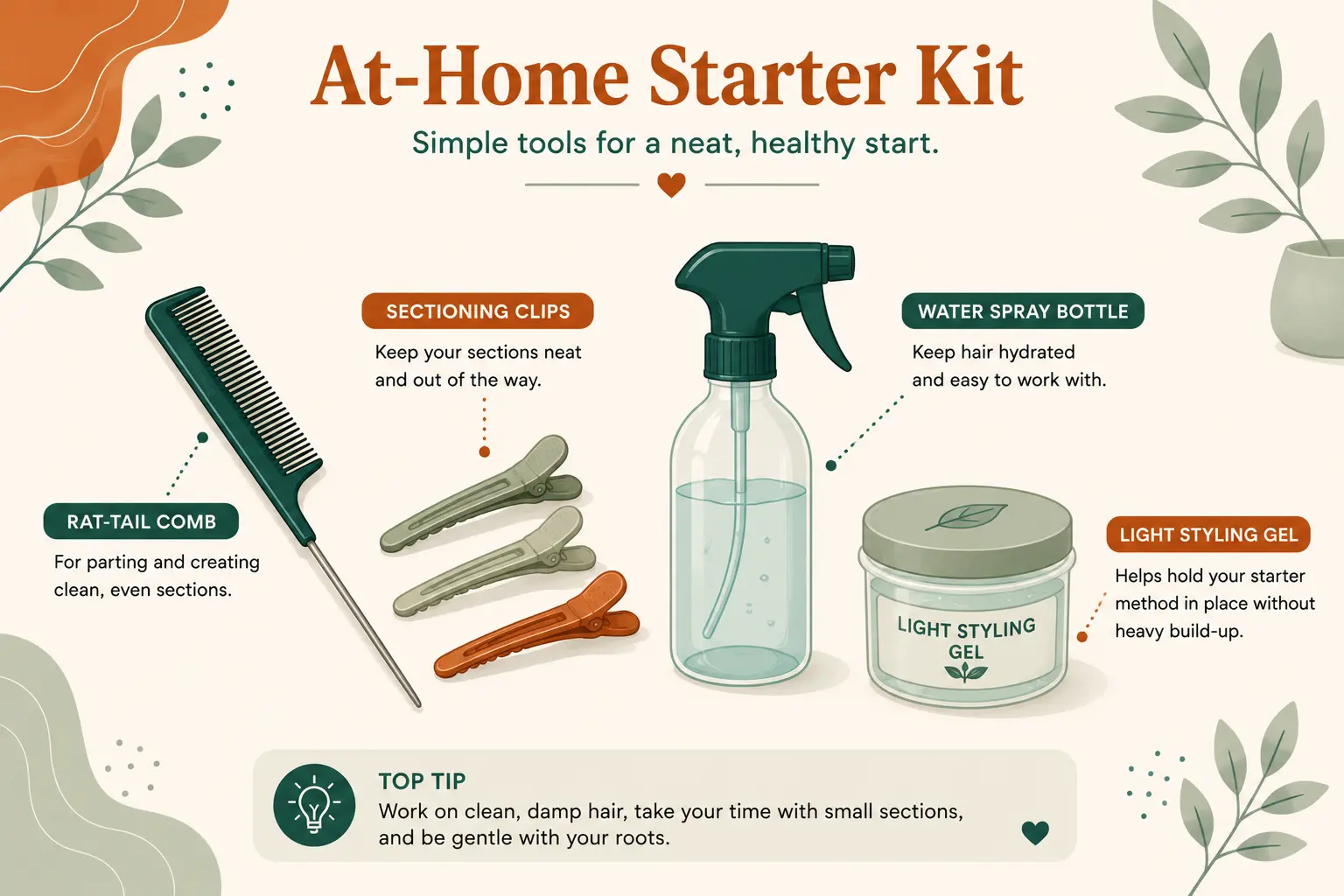
Two of the three, comfortably. Two-strand twists are the most DIY-friendly starter method, and plenty of people start their own locs this way with a rat-tail comb, some sectioning clips and a bit of patience.
Comb coils can be done at home too, though even sizing and clean parting are harder to get right on your own, so home coils often come out less uniform than a loctician’s.
Braidlocs are doable if you can already braid neatly, but the parting and consistency are the tricky part.
If you do start at home, work in a neat grid, keep your sections a sensible size for your hair’s thickness, and don’t go so small that the roots are weak.
The most common home-start mistakes are uneven sizing and parts that are too tight or too small, which are exactly the things a loctician gets right. If money is the main reason you’re going it alone, a single consultation first can save you from a wonky start that’s hard to fix later.
Which starter method should you choose?
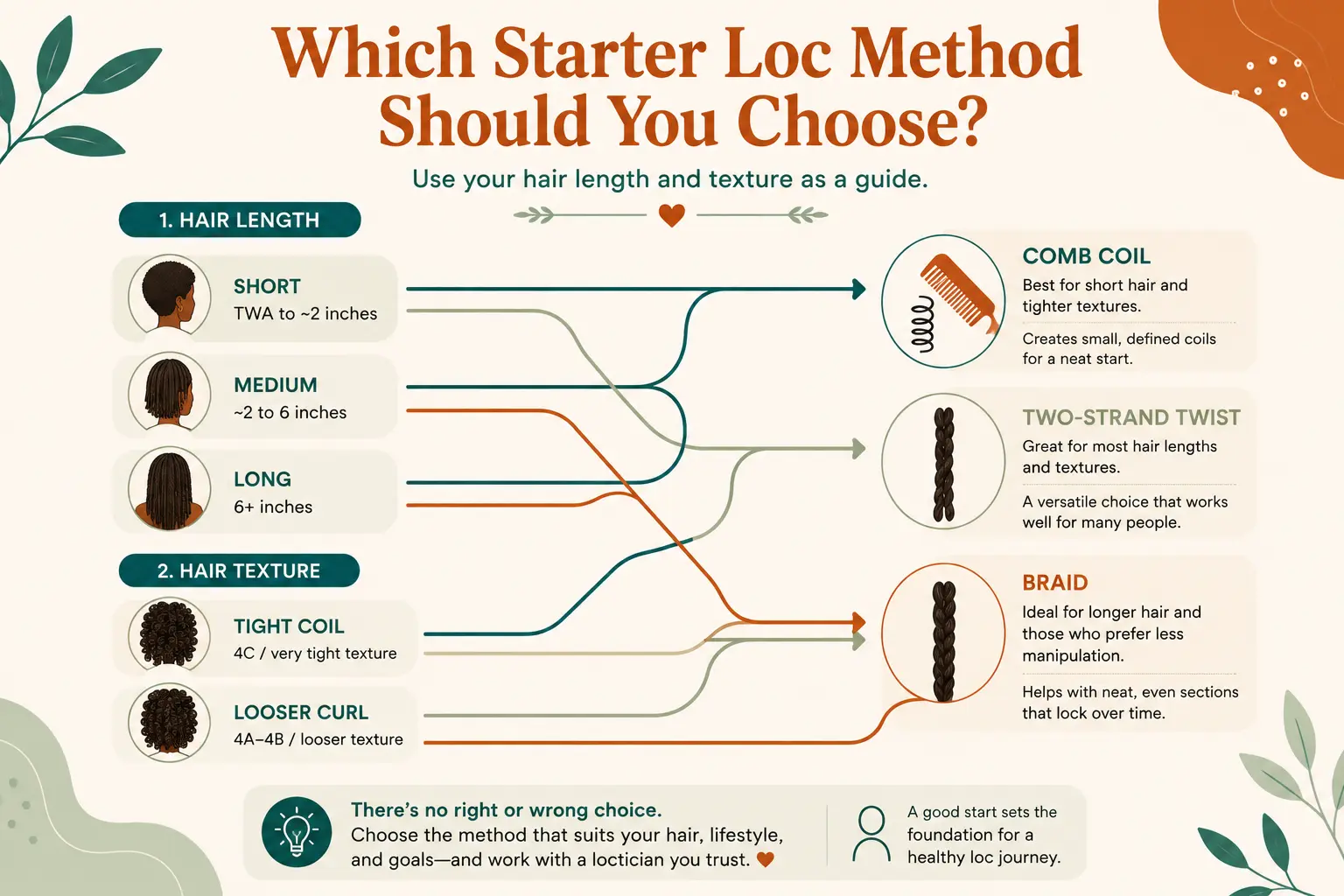
Pull it together and it’s usually a straightforward call.
If your hair is short and tightly coiled, comb coils are the natural starting point and give the neatest early look, as long as you’re ready to treat them gently in the first month.
If you’re starting at home, or you want something more forgiving through the first few washes, two-strand twists are the easiest and most reliable route, which is why so many people begin there.
And, if your hair is longer and you want the most security while it settles, or you like the defined plaited look, braidlocs give you the sturdiest start.
It also helps to think past the install to how each will be maintained.
Coils and twists are usually kept up with palm rolling or retwisting at the root, while braidlocs and firmer starts sometimes lean towards interlocking. If long-term upkeep is on your mind, our comparison of interlocking vs palm rolling vs crochet covers how each maintenance method works and what it costs you in time.
Whatever you lean towards, remember the starter look is temporary. All three methods pass through the same frizzy settling stage before they mature, so choose for how the method suits your hair and your patience, not for how the fresh install looks on day one.
If you want the fuller picture on starting, washing and the first year, our guide to starting locs in the UK covers it end to end.
Once you’ve settled on a method, the next step is finding someone who does it well. The starter locs directory lets you search by city and see who offers starter installs near you, so you can compare their work and prices before you book.
A consultation is worth it either way, since a good loctician will look at your length and texture and tell you honestly which of these will hold best for you.